
Follow missing client records
Teams often need to identify incomplete files, prepare reminders and record what remains outstanding.
Client Accounting Operations
An Atlensia team of autonomous collaborators handles repeatable client-accounting production, documents anomalies, and leaves review and client judgment with your accountants.
Client-accounting exception sent with context and source references
The operating reality
Accounting firms often need to keep recurring production moving across many client files while professional judgment and client decisions remain with accountants. Atlensia adds an autonomous collaborator team that understands the department and coordinates across client-operation teams.
Teams often need to identify incomplete files, prepare reminders and record what remains outstanding.
Teams often need to compare transactions and organize exceptions before accountant review.
Teams often need to monitor dependencies, supporting records and open review points.
Teams often need a consistent activity and exception view without mixing client information.
Your stack stays in place
The team works through named accounts in the actual accounting, messaging and document tools approved by the firm. Permissions and client scopes are explicit and traceable.
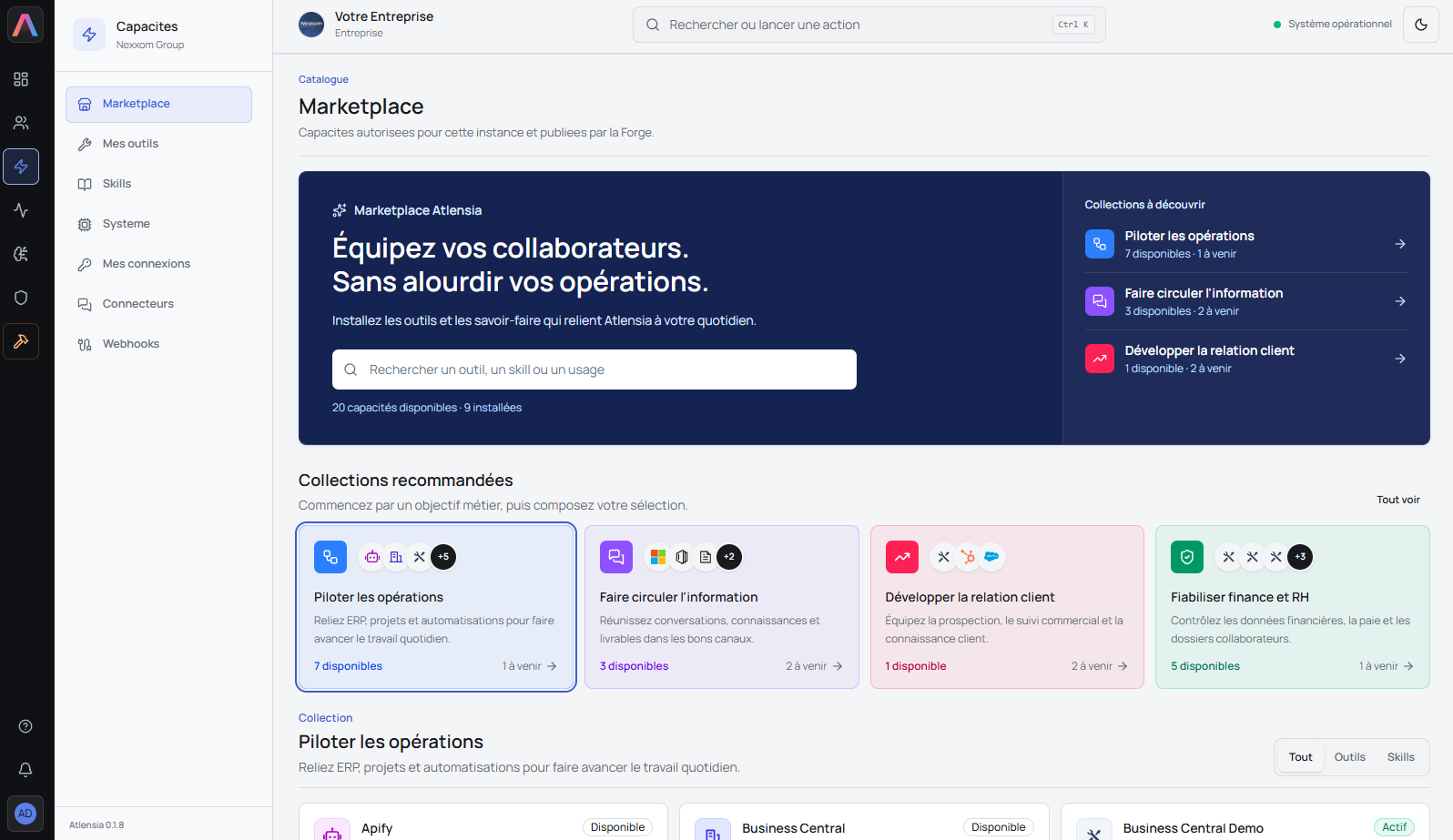
Marketplace
Platform equips the team for document checks, reconciliation preparation, recurring follow-up and exception reporting, within the client scopes authorized by the firm.
Missions covered
The autonomous client-accounting team works within explicit client scopes, coordinates with human and autonomous teams, and returns anomalies and decisions to the responsible accountants.
How it works
The operating pattern stays the same across each bounded mission.
The department assigns a mission or authorizes a queue to monitor.
The team works in the real business tools through named accounts and limited permissions.
The team understands its department, the human teams and the other autonomous collaborator teams involved.
Actions are documented and decisions return to the accountable human team.
Human control
The autonomous collaborator team can execute defined, repeatable missions with named access and limited permissions. Professional judgment, approvals, payment releases, accounting decisions, and project decisions remain with your human teams.
Operating-model illustration
We are currently deploying this operating model with an accounting firm in Switzerland to check missing invoices and unmatched payments, review recurring entries and anomalies, and prepare daily activity and exception reports. The deployment is in progress; accountants keep final review and client decisions.
Frequently asked questions
No. An autonomous collaborator team joins the department for defined, repeatable missions. Human teams remain responsible for professional judgment, approvals and decisions.
Nothing by default. Permissions and stop conditions are defined for each mission. Approval authority remains with the people designated by your organization.
Yes, when the required access and actions are supported. The autonomous team uses named accounts in the real business tools selected for the mission.
The autonomous team stops the affected step, records the exception and returns the available context to the responsible human team.
The autonomous team uses named access, limited permissions and an explicit mission scope. The access model is reviewed with your human team before deployment.
A short description of the mission, the department and teams involved, the tools used, the expected trace and the decisions that must remain human-controlled. Do not send sensitive records through this form.
Mission review
Share the repeatable mission your department is trying to keep moving. We’ll review how an autonomous collaborator team could operate, coordinate with human and autonomous teams, and what must remain human-controlled.